Thursday, April 16, 2009

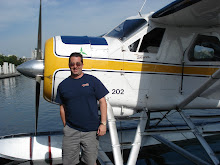
Duncan McIntosh AFC OBE 1922-1987


Duncan McIntosh

Wednesday, April 15, 2009

Peter Maksimovich Ostapenko 1928-


Peter Maksimovich Ostapenko was born in Prokhladny town of Kabardino-Balkariya. He served in the Army from 1947. In 1951 he graduated from Armavir high military aviation pilot school. After graduation appointed there as pilot-instructor (till 1957). In 1958 graduated from Test-pilot school and in 1967 graduated from MAI.

Between 1958 -1983 he worked as test-pilot and since 1983 as leading engineer at A.I.Mikoyan EDB. Tested sixty four aircraft types. Tested MiG-21U(E-6U), MiG-25P(E-155P) fighters,MiG-21PD(23-31) and MiG-23PD (23-01) prototypes from their first flights. He took part in testing MiG-19, MiG-21,E-152A, E-152, MiG-23, MiG-27, MiG-29 and MiG-31 aircraft. Set eight world records (one of them is absolute).

State Premium of USSR (1981). Awarded with Lenin Order, Order of Red Banner, Order of Labor Red Banner, Order of Red Star, medals. Awarded with Medal de Lavo (FAI) (1963).

Aviard Gavrilovich Fastovets 1937-1991


Aviard Fastovets was born in Kovrov town of Vladimir Region. Graduated from Air Force special school (Ivanovo town). Since 1954 served in Army. In 1955 graduated from Military aviation school of pilot elementary training (Aktiubinsk town), and in 1957 graduated from Kachinskoye military aviation pilot school. Was given a position of pilot-instructor in the school (till 1965). In 1967 graduated from Test-pilot School.

In 1967-1987 worked as test-pilot and in 1987-1991 as leading engineer at A.I.Mikoyan EDB. Took part in flight testing MiG-21, MiG-23, MiG-25, MiG-27, MiG-29, MiG-29K and MiG-31 aircraft. Awarded with Lenin Order, Order of October Revolution, Honor Mark Order, medals.

Valery Eugenyevich Menitsky 1944-2008


Menitsky (2nd from left) with MIG-31

Valery Eugenyevich Menitsky was born in Moscow. Served in Army since 1961. In 1965 graduated from Tambov high military aviation school. Appointed there as pilot-instructor (till 1968). In 1969 graduated from Test-pilot school.

In 1969-1992 worked as test-pilot at A.I.Mikoyan EDB. Conducted testing and development of newest aircraft models.
He tested and flew on 65 aircraft types MiG-23, MiG-25, MiG-29, MiG-31 included. He made the first flights and tested MiG-27 and MiG-29 M planes.

Awarded with Lenin premium, Lenin and Honor Mark Orders, medals.

Boris Antonovich Orlov 1934-2000


Boris Antonovich Orlov was born in the town of Kansk, Krasnoyarsk Area. In 1952 he graduated from Novosibirsk aviation technical school, and in 1955 graduated from Central united flying-technical school of Voluntary Society of Assistance to Army, Aviation and Fleet (VCAAAF) in Saransk town. He worked as a pilot-instructor, navigator, flight section commander at Novosibirsk Aeroclub till 1963. He took part in the second world championship on aerobatic flying as a member of USSR combined team in Hungary (1962). Graduated form Test-pilot school in 1965 and MAI in 1970.

Between 1965-1987 he worked as test-pilot and in 1987 became a leading engineer of A.I.Mikoyan EDB. B.A. Orlov successfully conducted a number of important tests of supersonic jet aeroplanes MiG-21, MiG-23, MiG-25, MiG-27, MiG-29 and MiG-31 included.

Set one world aviation record.

Awarded with Orders of Lenin, October Revolution, Honor Mark, Labor Red Banner, medals.

Mikhail Mikhailovich Komarov 1937-1970


Born in Moscow. From 1954 he served in the Army,graduating from Armavir military aviation pilot school in 1956. He served in Air Force front-line units. Between 1963-1965 he worked as a test-pilot of Tbilissi aviation plant.

In 1965 he joined A.I.Mikoyan EDB as a test pilot and took part in testing MiG-21, MiG-23 and MiG-25 airplanes. Made the maiden flight of and tested the MiG-23U.

Set two world aviation records (one of them absolute). He was killed in crash of during a test flight of a MiG-23 aircraft. He was awarded the Medal of de Lavo (FAI) (1967).

Victor Vasilyevich Ryndin 1942-


Victor Vasilyevich Ryndin graduated from the Chernigov military aviation pilot school in 1965 and the graduated from Test-pilot school in 1971 and MAI in 1975.

Between 1971-1989 he worked as a test-pilot at A.I.Mikoyan EDB. He took part in testing MiG-23, MiG-25, MiG-27, MiG-29, MiG-31 aircraft and their versions. He tested aviation armament systems, navigational systems, electronic equipment. He tested over 70 aircraft types.

Awarded with Order of Labor Red Banner, Order of October Revolution, Honor Mark Order, medals.

Aleksandr Vasilyevich Fedotov 1932-1984


One of the leading test pilots of his era, Aleksandr Fedotov was a Major General in the Russian Airforce, he graduated from Flight School Stalingrad in 1950. He was a pilot in the airforce from 1950 to 1957,graduating from the Aravmir School for Military Pilots in 1952 and worked then as an instructor pilot.

In 1958 he graduated from testpilot school and worked for the OKB Mikoyan. In 1965 he worked for the Moscow Aviation Institute (MAI). Between 1961 and 1977 he achieved 18 world records, including three absolute records on E-166 and MiG-25-jets. He held since August 31, 1977 the world altitude record for planes that take off under their own power (123,524 feet).

Between 1976 and 1978 he was involved in the EPOS "Spiral"-Program. In 1977 he performed the maiden flight of the MiG-29. He died in a crash of a MiG-31 (together with V. S. Zaytsev) in 1984.

He became a Hero of the Soviet Union in 1966 and in 1969 a Meritious test pilot of the Soviet Union.

Wednesday, April 08, 2009

James Thomas Fitzgerald, Jr. 1920-1948


James Fitzgerald was a US Army Air Force test pilot who had joined the X-1 program, and was 2nd person to fly supersonic after Chuck Yeager.Fitzgerald had been an accomplished fighter pilot during World War II before he was shot down and held in a German prisoner of war camp until liberated in 1945. Though denied the opportunity to continue flying combat in the Pacific, Fitzgerald was later selected to become an Air Force test pilot. He completed seven flights aboard the X-1 including four at supersonic speeds. Fitzgerald first surpassed Mach 1 during the 71st flight of the program on 24 February 1948. He reached a top speed of Mach 1.1 before a fire forced him to shut off the engine and jettison the propellants. Fitzgerald continued flying the X-1 over the next few months until he was tragically killed in September 1948 following a landing accident aboard a T-33.

Herbert H. Hoover 1912-1948


Herbert (Herb) Hoover was born on May 18, 1912, in Knoxville, Tennessee. He spent the next 22 years in Knoxville and graduated from the University of Tennessee in 1934 with a degree in Mechanical Engineering.

After graduation from the University of Tennessee, he was accepted by the Army Air Corps and trained at Randolph and Kelly Fields. He was then assigned to a tactical group at Mitchell Field. Because his position in the Army, as a Lieutenant, was temporary, he took the U.S. Civil Service exam in the spring of 1937, hoping to get a job with the Dept. of Agriculture. However, before anything with the Dept. of Agriculture materialized, he accepted a job with American Airlines and had even gone as far as being measured for his pilot's uniform when General Frank of Mitchell Field pulled some strings that resulted in Herb being offered a piloting job with the Standard Oil Company in South America. When he accepted the job with Standard Oil, he said he didn't want to become what he called a "taxi driver," serving at the beck and call of corporate officials who wished to be flown from place to place. Instead, upon arriving in Venezuela, he was put to work as an aero "truck driver," which involved hauling equipment, personnel, and hospital patients from camp to camp. Although there wasn't much difference between "taxi driver" and "truck driver" he had the opportunity to do more important aerial photography mapping of unexplored territory in the interior of Venezuela.

After three and a half years in South America, Herb yearned to return to the United States, which he did in December 1940 when he accepted a job as an experimental test pilot with the National Advisory Committee for Aeronautics (NACA) in Hampton, Virginia. Because of his experience flying through bad weather, he volunteered to test fly the XC-35 through thunderstorms. He became one of the first pilots to fly through thunderstorms deliberately on bad-weather flying research. He already had the reputation as a cool pilot in tight situations; once, during an instrumentation calibration flight in a NACA SB2C Helldiver, the plane's cockpit canopy hood came loose in flight smashing Hoover across the forehead inflicting a deep cut that bled profusely. Though stunned by the blow and blinded by blood flowing into his eyes, Hoover instinctively retained control of the dive bomber, cleared his eyes, and despite his injuries, brought the plane back to Langley for an emergency landing.

On another occasion, while he was firing a rocket-propelled model from a P-51 Mustang in a Mach 0.7 dive, the model disintegrated, showering the Mustang with wreckage. The wreckage punctured the plane's coolant tank, but again Hoover brought the plane in for a successful forced landing.

Soon, he was put in charge of all flight operations and then became chief test pilot for the NACA at the Langley Memorial Laboratory, in Hampton, Virginia. He flew more than a hundred different types of airplanes.

When the Air Force-NACA transonic flight research program began at the Muroc Flight Test Unit, California, Herb initiated the NACA flight operations of the Bell XS-1 (tail #6063) research airplane under Bell engineer, Robert Frost's careful tutelage in August 1947 and made his first NACA glide-familiarization flight on October 21, 1947, for stall check, (one week after Capt. Chuck Yeager became the first pilot to exceed the speed of sound in the AF XS-1, Tail # 6062). On Hoover's flight, the little rocket plane touched down hard on its nose wheel, and the landing strut collapsed. Repairs and subsequent maintenance work kept the XS-1 grounded until December 16, 1947, when Hoover made the first rocket flight ever performed by a NACA pilot, attaining Mach 0.71. He flew another checkout flight the next day reaching Mach 0.84. In January 1948, NACA pilots (Hoover and Howard Lilly) completed seven subsonic flights in their XS-1 and by the end of the month Hoover had reached Mach 0.925. On March 4, 1948, Hoover attained Mach 0.943 at 40,000 feet. Then, six days later, on March 10, 1948, Hoover dropped from the B-29 on a stability and loads investigation, fired three of the four rocket chambers and began to climb, leveling out at 42,000 feet. The NACA XS-1 rapidly accelerated to Mach 0.93 and Hoover fired the fourth chamber. Under full thrust, the rocket research aircraft shot to Mach l.065, approximately 703 mph. Herbert Hoover had become the first civilian pilot to exceed the speed of sound. After engine burnout, he coasted to the dry lake. Despite emergency efforts, Hoover found he could not extend the nose landing gear. He held off on the nose as long as possible, and even though the plane skidded to a stop on the underside of the nose, the damage was slight. On NACA powered flight 11, Herb became not only the first civilian, but the second person to exceed the speed of sound.

He received the Octave Chanute Award in 1948 for "contributions to the application of flight test procedures to basic research in aerodynamics, and the development of methods for scientific study of transonic flight." In 1949, he was awarded the Air Medal "for meritorious achievement while participating in aerial flight on March 10, 1948," when he first broke the sound barrier.

Herb flew the XS-1 in its exploratory tests in the transonic and supersonic range and was the flight instructor who trained other NACA pilots (Lilly, Bob Champine, and John Griffith) in the flying qualities of the XS-1 while flying back and forth from Langley to Muroc and maintaining his job as chief of the Langley research pilots.

Hoover lost his life on August 14, 1952, when the B-45 jet bomber he was flying on a mission to test various research instruments tore apart in mid-air and crashed near Barrowsville, Virginia. According to the accident report that was declassified 30-years later, Herb was almost certainly killed instantly when, after ejecting, his body collided in the air with portions of the crumbling plane. The ripcord of his parachute was not pulled. The co-pilot, John A. Harper, escaped with minor injuries.

Wednesday, April 01, 2009

Joseph A. Cannon 1918-2007


Joe Cannon a native of Niagara Fall,NY was widely known throughout the American aerospace industry for his activities in flight research and marketing for Bell Aerosystems. He joined Bell in 1942 as a test pilot after civilian flight training at Niagara University and service with the RCAF as a flight instructor.
During his 22 years service with Bell, Joe Cannon had flown more than 50 types of aircraft,including the Bell X-1 Rocket research airplane. In addition to his service as a test pilot, he held several upervisory positions at Bell, including manager of flight operations at the B-29 plant in Marietta,Ga from 1943-1945,chief of flight test for the company from 1953 until 1957 and manager of aerospae marketing from 1960 until his appointment as manager of the expanded air-cushion vehicles marketing group.

Sqn Ldr G.E.C Eric Genders AFC DFM 1920-1950


George Eric Clifford Genders

Igor Viktorovich Votintsev 1953-


The Sukhoi SU-47 Berkut made its maiden flight at Zhukovsky on September 25th, 1997, in the hands of Sukhoi's test pilot Igor Votintsev.

Igor Viktorovich Votintsev